CRM RFP Framework for Smart CRM Selection
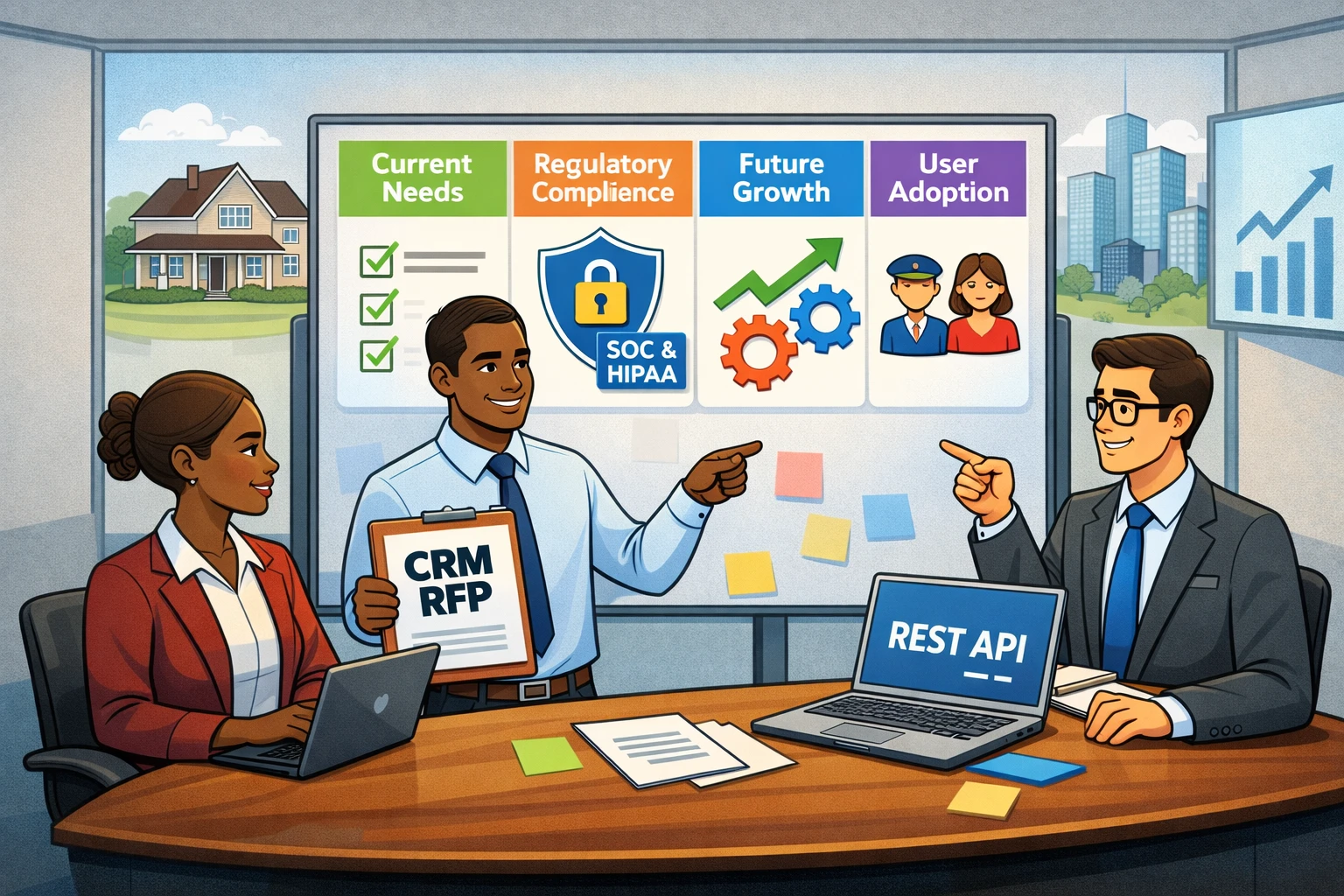
Looking for a CRM Is Like Choosing a Home
Looking for a CRM is a lot like choosing a home you're planning to live in for the next 10+ years. Price is a huge factor but just as important is the asset's ability to meet your current needs while being agile enough to accommodate growth and an ever changing landscape. For this reason, the RFP you submit for your next CRM needs to cater to your unique needs. To help you craft the perfect RFP I've developed a framework to help you decide.
Your Current Problems
Poll your users to figure out what their aches and pains are with the current system. Use this as your guide while you formulate your question set. Here's a sample set.
- Does your system allow for field level customization? Specifically, can certain fields be view/edit restricted for certain roles?
- Does your system allow users to create custom objects (Sales, Tickets, etc)?
- Is access to write custom SQL queries against the database permitted?
- Does your system publish an API?
Why this matters: HubSpot, SugarCRM, and other platforms are notoriously limited when it comes to reporting. If you've got tons of custom reports and business requirements you will quickly find the canned reports to be lacking. Even the point-and-click tools aren't robust enough to build complex reports.
Having at least read level access to the underlying database will allow you to write queries to access data that the native tools simply could not provide. Many vendors allow this but it isn't a universal feature just yet. Similarly, some platforms allow you to add unlimited custom fields but restrict object creation.
This is important since you may end up re-purposing modules, which can get messy in a hurry. Finally, most businesses are using more than one piece of software. And, to be truly efficient, you'll need these separate systems to be able to "talk" to each other. This is where REST APIs come in handy.
Your Regulatory Requirements
An AI powered CRM with all the latest features is worthless to you if it doesn't tick the box on your regulatory requirements. Before you get too deep into implementing a new system, ensure it meets your regulatory requirements. Here are some questions to get you started.
- Where is your data housed?
- How does RBAC (role based access controls) work in your system?
- Are audit logs readily available?
- Will you provide a BAA?
- Is your company SOC 2 compliant?
- How long are records retained in your system?
- Does your system allow for IP restricted access?
Why this is important: I work with a ton of clients in healthcare and the financial industry. And, as you'd expect, the security requirements are super strenuous. One false move or unhardened surface area can spell disaster for your organization. If you're dealing with HIPAA, you'll want to ensure that role based access controls are possible and you have access to robust audit logs.
In the event of a breach, you need to be able to show who accessed what record and when. Similarly, if you're storing patient records you'll want to ensure you retain them for an adequate period of time. This requirement varies from state to state but in general, you should hang on to them for 6 to 10 years.
Your Future Problems
Think about where you see your company in the next 5 or 10 years. It's important to select a vendor that can grow with you. If you don't, your newly cemented CRM will quickly become a bottleneck.
- Can your system support 1,000 concurrent users?
- What is the current contact limit for your system?
- Is your system AI automation friendly? (can we use bots for automation related tasks)
- Does your platform integrate with < Target Software >?
- Can we connect to your platform without paying for development fees?
- What features are currently limited to higher tiers? And, what is the cost difference between these tiers?
Why this is important: Sometimes growth comes at you with very little warning. You may sign a deal tomorrow that triples your business. As Optimus Prime told us "Fate rarely calls upon us at a moment of our choosing." Thus, you'll need your CRM to be prepared to grow with you.
I once had a client land a deal that tripled their business in a matter of months. This increase in business resulted in an increase in call volume. And, unfortunately, their CRM integrated telephony platform could not handle the number of calls all coming in at the same time.
As a result, callers were hit with error messages and their newly won client was left thinking they made the wrong decision. All of this could have been avoided by simply posing the question before onboarding.
User Adoption Strategy
In my decade plus years of experience in implementing and developing CRM software, I've learned that user adoption is one of the most overlooked aspects of CRM implementation. Oftentimes CRM systems are chosen based on the opinions of a few key stakeholders (sometimes people who will seldom use the system). Here's a question set that will help ensure you don't leave out the most important part of the CRM RFP, user satisfaction and adoption.
- Does your system provide digital learning materials for non-admins and administrators?
- Is instructor-led teaching available?
- Does your system offer a mobile app for both iOS and Android?
- What is the average time it takes a non-technical user to become proficient with your system?
- What is the average time it takes an administrator / technical person to become proficient in your system?
Why this matters: Your average employee does not see your CRM as an asset. Rather, it's just an obstacle they have to overcome to get to their paycheck. If their pay isn't commission based, becoming proficient with the CRM serves little purpose to them. For this reason, you'll want to ensure the learning curve isn't too steep for your casual users.
Additionally, if you are considering new AI agent features, don't be surprised if employees aren't supportive or interested. Many view AI as a threat to their position and will be reluctant to jump onboard with something they think will replace them.
Let Super Easy CRM Help You Craft the Perfect CRM RFP
There is no one-size-fits-all or even fits-most CRM RFP. Businesses, needs, and preferences vary greatly from person to person. The only way to truly get your questions answered is to adhere to the framework laid out in this article. Define your problems, ensure your regulatory requirements are met, focus on future problems and growth, and make sure your potential vendor has solid user adoption features.
And, if you're planning on moving from one CRM to another, check out our detailed CRM Migration Plan. Finally, should you ever get stuck or want to chat about your current CRM struggles, feel free to drop us a message at contact@supereasycrm.com. Or, if you're on LinkedIn, connect with me using the link below.

Posted by: Matt Irving on 02/16/2026